Whether you are building a garden walkway, refreshing a flower bed border, or filling in around patio stepping stones, calculating the exact number of bags of gravel you need is the key to finishing your DIY project without running short or buying costly excess.
Buying gravel in bags (from home improvement centers like Home Depot, Lowe’s, or Menards) is convenient, clean, and accessible. But because gravel is sold by volume (cubic feet) and weight (pounds or kilograms), converting square footage into bags can feel confusing.
In this comprehensive guide, we provide the exact formulas, standard bag size comparisons, worked project examples, and an interactive bag calculator to give you instant, accurate numbers.
Quick Answer: One standard 0.5 cu ft bag of gravel covers 3.0 square feet at 2 inches deep, 2.0 square feet at 3 inches deep, or 6.0 square feet at 1 inch deep. For a 100 sq ft area at 2” depth, you will need 34 to 37 bags (including a 10% settling buffer).
🧮 Interactive Bag Calculator
Use our interactive gravel bag calculator below to determine the exact number of bags, cubic feet, tons, and estimated material cost for your DIY project:
Gravel Calculator in Bags
Calculate total bags, cubic volume, weight & costs
Bags vs. Bulk Gravel: When Does Bagged Make Sense?
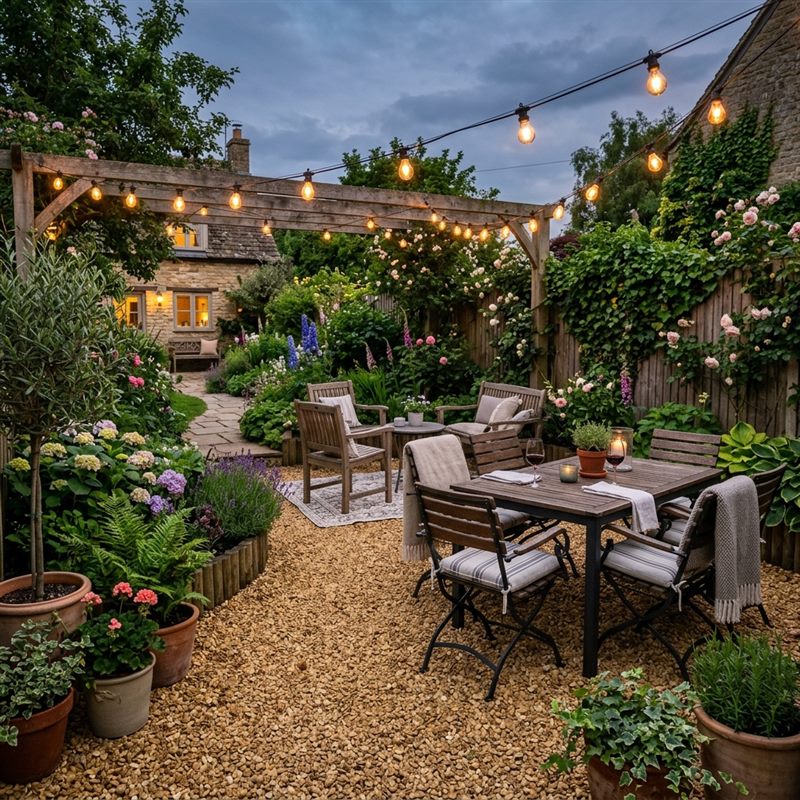
When purchasing gravel, you have two primary buying methods: bagged gravel (sacks sold in plastic packaging at retail stores) or bulk gravel (loose gravel delivered by dump truck).
Understanding the pros and cons of each helps you choose the most cost-effective and practical option for your situation:
When Bagged Gravel Makes Sense:
- Small to medium DIY projects: If you need under 1.5 tons (approx. 50 to 60 bags), buying bagged gravel is often cheaper than paying a $75–$150 bulk delivery fee.
- Tight access & backyards: Wheelbarrows or carry sacks can easily navigate through standard backyard gates, basements, or narrow garden pathways where a 20-ton dump truck cannot enter.
- Cleanliness & staged timing: Bags can sit neatly on a garage floor or covered patio for weeks without washing away in the rain or killing the lawn.
- No driveway damage: Heavy commercial delivery dump trucks can crack thin residential asphalt or concrete driveways.
When Bulk Delivery Makes Sense:
- Large projects: Driveways, parking pads, large patios, or deep French drains needing more than 2 to 3 tons (75+ bags).
- Lower material cost per ton: Bulk gravel costs $25 to $65 per ton, whereas bagged gravel works out to $180 to $250+ per ton equivalent.
Standard Bag Sizes Explained
Gravel bags in the United States and North America are labeled either by volume (cubic feet) or weight (pounds). Here is how the most common retail sizes break down:
| Bag Size Label | Volume (cu ft) | Approx. Weight | Typical Price (USD) | Common Retailers | Best For |
|---|---|---|---|---|---|
| 0.5 cu ft Bag | 0.50 cu ft | 45–50 lbs (20–23 kg) | $4.25 – $6.50 | Home Depot, Lowe’s, Menards | Standard DIY paths, borders, patio infill |
| 50 lb Bag | ~0.50 cu ft | 50 lbs (22.7 kg) | $4.50 – $6.00 | Home Depot, Lowe’s, Ace Hardware | Commercial gravel, pea gravel, #57 stone |
| 0.4 cu ft Bag | 0.40 cu ft | 38–42 lbs (17–19 kg) | $5.50 – $8.00 | Home Depot, Lowe’s, Garden Centers | Specialty marble chips, Mexican beach pebbles |
| 1.0 cu ft Bag | 1.00 cu ft | 90–100 lbs (41–45 kg) | $8.00 – $13.00 | Specialty Landscape Supply | Larger DIY jobs, lava rock, drainage |
| Half-Yard Tote (Super Sack) | 13.5 cu ft (0.5 cu yd) | ~1,350–1,400 lbs | $75 – $120 | Landscape Yards, Home Depot Online | Medium projects, pallet drop delivery |
| Full Yard Super Sack | 27.0 cu ft (1.0 cu yd) | ~2,700 lbs (1.35 tons) | $130 – $220 | Landscape Supply Yards | Clean bulk delivery without loose driveway piles |
Crucial Tip: A standard 0.5 cubic foot bag weighs approximately 48 to 50 lbs. However, if the gravel is wet or damp inside the plastic packaging (very common in outdoor garden centers), the bag can weigh up to 55 lbs. Always ensure your vehicle payload capacity is sufficient.
Bag Calculation Formula: Total Cubic Feet ÷ Bag Size
To find out how many bags of gravel you need, follow this simple 5-step mathematical formula:
Step 1: Area (sq ft) = Length (ft) × Width (ft)
Step 2: Depth in Feet = Depth (inches) ÷ 12
Step 3: Total Volume (cu ft) = Area (sq ft) × Depth in Feet
Step 4: Raw Bags Needed = Total Volume (cu ft) ÷ Bag Volume (e.g. 0.5 cu ft)
Step 5: Total Bags to Order = Raw Bags × 1.10 (adding 10% buffer)
Direct Area Coverage per 0.5 cu ft Bag
If you are using the standard 0.5 cu ft bag, you can use these rapid coverage multipliers:
| Depth (inches) | Depth in Feet | Coverage per 0.5 cu ft Bag | Bags Needed per 100 Sq Ft |
|---|---|---|---|
| 1.0 inch | 0.0833 ft | 6.00 sq ft | 17 bags (19 with 10% buffer) |
| 1.5 inches | 0.1250 ft | 4.00 sq ft | 25 bags (28 with 10% buffer) |
| 2.0 inches | 0.1667 ft | 3.00 sq ft | 34 bags (37 with 10% buffer) |
| 2.5 inches | 0.2083 ft | 2.40 sq ft | 42 bags (46 with 10% buffer) |
| 3.0 inches | 0.2500 ft | 2.00 sq ft | 50 bags (55 with 10% buffer) |
| 4.0 inches | 0.3333 ft | 1.50 sq ft | 67 bags (74 with 10% buffer) |
Worked Examples for Small DIY Projects
Here are four real-world calculations showing how to apply the formula to common home landscaping projects:
Example 1: Flower Bed Border (50 sq ft at 2” depth)
- Dimensions: 25 ft long by 2 ft wide = 50 sq ft
- Depth: 2 inches = 2 / 12 = 0.1667 ft
- Volume: 50 × 0.1667 = 8.33 cu ft
- Bags (0.5 cu ft): 8.33 ÷ 0.5 = 16.66 bags
- With 10% Buffer: 16.66 × 1.10 = 18.33 → Order 19 bags
- Estimated Weight: 19 × 50 lbs = 950 lbs
- Estimated Cost: 19 × $4.98 = $94.62
Example 2: Garden Walkway (90 sq ft at 2.5” depth)
- Dimensions: 30 ft long by 3 ft wide = 90 sq ft
- Depth: 2.5 inches = 2.5 / 12 = 0.2083 ft
- Volume: 90 × 0.2083 = 18.75 cu ft
- Bags (0.5 cu ft): 18.75 ÷ 0.5 = 37.5 bags
- With 10% Buffer: 37.5 × 1.10 = 41.25 → Order 42 bags
- Estimated Weight: 42 × 50 lbs = 2,100 lbs (approx. 1.05 tons)
- Estimated Cost: 42 × $4.98 = $209.16
Example 3: Fire Pit Seating Area (144 sq ft at 3” depth)
- Dimensions: 12 ft by 12 ft square area = 144 sq ft
- Depth: 3 inches = 3 / 12 = 0.25 ft
- Volume: 144 × 0.25 = 36.0 cu ft
- Bags (0.5 cu ft): 36.0 ÷ 0.5 = 72 bags
- With 10% Buffer: 72 × 1.10 = 79.2 → Order 80 bags
- Decision Note: At 80 bags (approx. 2 tons / $400), check if local bulk delivery ($120 material + $100 delivery = $220) is cheaper!
Example 4: Flagstone Stepping Stone Infill (80 sq ft at 1.5” depth)
- Dimensions: 80 sq ft net gravel infill area
- Depth: 1.5 inches = 1.5 / 12 = 0.125 ft
- Volume: 80 × 0.125 = 10.0 cu ft
- Bags (0.5 cu ft): 10.0 ÷ 0.5 = 20 bags
- With 10% Buffer: 20 × 1.10 = 22 → Order 22 bags
- Estimated Cost: 22 × $4.98 = $109.56
Bags vs. Bulk Delivery: Cost Comparison & The Tipping Point
When does it stop making financial sense to load bags into your car, and when should you hire a bulk dump truck delivery?
| Quantity Needed | Bagged Gravel Cost (Pickup) | Bulk Delivery Cost (Delivered) | Recommended Buying Method |
|---|---|---|---|
| 10 Bags (~0.25 tons) | $45 – $60 | $150 – $200 (due to min. delivery fee) | 🛍️ Bagged (Easy DIY trunk pickup) |
| 25 Bags (~0.63 tons) | $110 – $140 | $160 – $220 | 🛍️ Bagged (Fits in pickup or SUV) |
| 40 Bags (~1.00 ton) | $180 – $240 | $175 – $230 | ⚖️ Tipping Point (Equal cost; choose based on access) |
| 60 Bags (~1.50 tons) | $270 – $360 | $180 – $250 | 🚚 Bulk Delivery (Cheaper & saves heavy lifting) |
| 100 Bags (~2.50 tons) | $450 – $600 | $200 – $290 | 🚚 Bulk Delivery (Saves over $250+) |
| 200 Bags (~5.00 tons) | $900 – $1,200 | $260 – $400 | 🚚 Bulk Delivery (Saves $600+) |
⚠️ Vehicle Payload Capacity Warning
A common mistake DIY homeowners make is overloading passenger vehicles with heavy gravel bags:
- Compact Car / Sedan Trunk: Max 6 to 8 bags (~300–400 lbs).
- Mid-Size SUV / Crossover: Max 10 to 14 bags (~500–700 lbs).
- Half-Ton Pickup Truck (F-150 / Silverado 1500): Max 30 to 35 bags (~1,500–1,750 lbs).
- One Pallet of Bagged Gravel: Contains 56 to 64 bags and weighs 2,800 to 3,200 lbs (1.4 to 1.6 tons) — requires a heavy-duty 3/4-ton truck or flatbed trailer delivery.
Home Depot, Lowe’s & Menards Common Bag Options
Most big-box retailers stock several standard gravel product lines in their garden and building materials departments:
| Brand & Product Line | Bag Size & Weight | Approximate Price | Stone Type | Best Application |
|---|---|---|---|---|
| Vigoro Pea Pebbles | 0.5 cu ft (~48 lbs) | $4.68 – $5.48 | Natural river pea gravel | Patios, walkways, flower beds |
| Quikrete All-Purpose Gravel | 50 lb bag (~0.5 cu ft) | $4.98 – $5.98 | #57 crushed limestone/granite | General drainage, concrete base, pathways |
| Pavestone Marble Chips | 0.5 cu ft (~50 lbs) | $5.98 – $7.48 | Bright white crushed marble | High-contrast garden borders, tree rings |
| Vigoro River Rock | 0.5 cu ft (~48 lbs) | $4.98 – $6.28 | Multi-color rounded river rock | Landscape edging, water features |
| Pavestone Red Lava Rock | 0.5 cu ft (~20–25 lbs) | $6.48 – $7.98 | Volcanic porous stone | Ultra-lightweight mulch, fire pit borders |
| Sakrete Multi-Purpose Gravel | 50 lb bag | $4.98 – $5.75 | Washed natural gravel | Drainage, post setting, base layer |
Pro Tip: If you are purchasing 50+ bags at Home Depot or Lowe’s, ask the Pro Desk for volume tier pricing or pallet-rate discounts. Many stores offer 10% to 15% off full pallet purchases.
Gravel Bags Conversion Quick Reference
| Unit to Convert | Equivalent in 0.5 cu ft Bags | Equivalent in Weight (lbs) |
|---|---|---|
| 1 Cubic Yard (27 cu ft) | 54 Bags | ~2,700 lbs |
| 0.5 Cubic Yard (13.5 cu ft) | 27 Bags | ~1,350 lbs |
| 1 Ton (2,000 lbs) | ~38 to 40 Bags | 2,000 lbs |
| 0.5 Ton (1,000 lbs) | ~19 to 20 Bags | 1,000 lbs |
| 100 Sq Ft at 2” Depth | ~34 to 37 Bags | ~1,700–1,850 lbs |
| 100 Sq Ft at 3” Depth | ~50 to 55 Bags | ~2,500–2,750 lbs |
Frequently Asked Questions
How much area does one 0.5 cu ft bag of gravel cover?
At a 2-inch depth, one standard 0.5 cu ft bag covers 3.0 square feet. At 3 inches deep, it covers 2.0 square feet. At a light 1-inch decorative layer, it covers 6.0 square feet.
How many bags of gravel do I need for 100 square feet?
For a 100 square foot area:
- At 1 inch deep: 17 bags (19 with 10% buffer)
- At 2 inches deep: 34 bags (37 with 10% buffer)
- At 3 inches deep: 50 bags (55 with 10% buffer)
- At 4 inches deep: 67 bags (74 with 10% buffer)
How many 50 lb bags of gravel make 1 ton?
Since 1 ton equals 2,000 pounds, exactly 40 bags of 50 lb gravel make 1 ton (2,000 ÷ 50 = 40).
How many bags of gravel are in a cubic yard?
One cubic yard equals 27 cubic feet. If using standard 0.5 cubic foot bags, you need 54 bags to make 1 cubic yard (27 ÷ 0.5 = 54).
How many bags of gravel per square foot at 2” depth?
At a 2-inch depth, each square foot requires 0.167 cubic feet of gravel. Since a bag contains 0.5 cubic feet, you need 0.33 bags per square foot (or 1 bag for every 3 square feet).
Can I transport 20 bags of gravel in my car?
Twenty 50-lb bags weigh 1,000 lbs (0.5 tons). This exceeds the safe payload capacity of most passenger sedans and small hatchbacks, which typically carry 750–850 lbs total (including passengers). A standard SUV can handle 10–14 bags safely, while a pickup truck or utility trailer is recommended for 20+ bags.
Summary & Next Steps
Calculating gravel in bags comes down to finding your cubic volume and dividing by your bag size:
- Multiply Length × Width to find square footage.
- Multiply by Depth (in feet) to find total cubic feet.
- Divide by 0.5 for standard retail bags.
- Add a 10% buffer for compaction, settling, and irregular edges.
💡 Need an exact calculation for driveways, trenches, or full yard deliveries? Use our comprehensive, free Gravel Calculator to get instant ton, cubic yard, and cost estimates for every gravel type.
Found this helpful? Share it!
Ready to calculate your gravel?
Use our free calculator to get instant volume, weight & cost estimates.
Try the Free Calculator →