Interactive Gravel Explorer
Click any type to see details & photos
A French drain is one of the most effective ways to redirect water away from your home, yard, or foundation — but getting the gravel quantities wrong can make or break the project. Too little gravel and water backs up. Too much and you are overspending on material you cannot use.
In this guide you will learn the exact formula to calculate how much gravel you need, which gravel type to use, and how to size your trench correctly — whether you are doing a simple yard drain or a full foundation drainage system.
Quick Answer: A standard French drain trench (6 inches wide x 12 inches deep x 50 feet long) requires approximately 1.5 to 2 tons of clean washed crushed stone (#57 gravel).
What Is a French Drain?
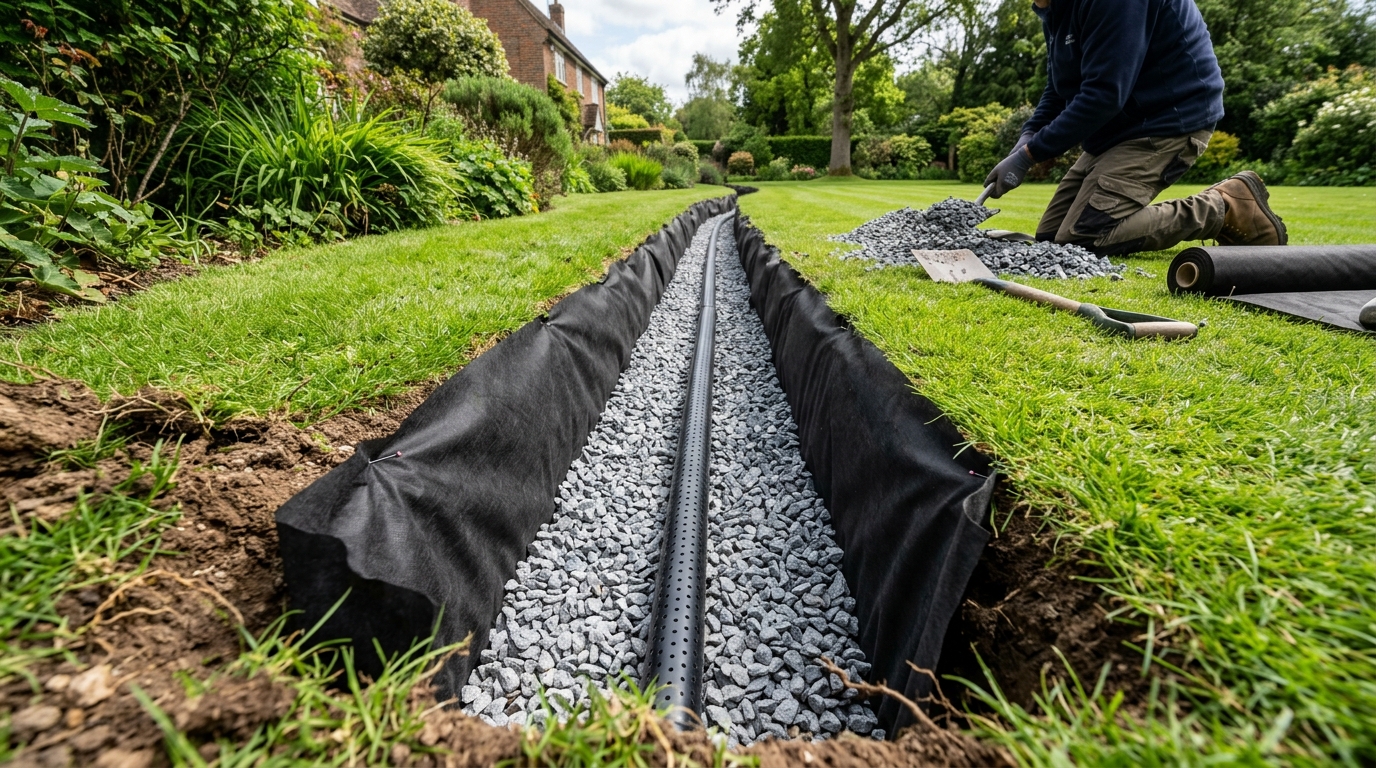
A French drain is a gravel-filled trench (with or without a perforated pipe) designed to intercept and redirect groundwater or surface water. Key components:
- The trench — excavated to the correct depth and width
- Landscape fabric (filter cloth) — lines the trench to prevent soil migration into the gravel
- Gravel fill — clean, washed crushed stone that allows water to flow freely
- Perforated pipe (optional but recommended) — collects and channels water to an outlet
- Top cover — gravel to the surface, sod, or decorative stone to finish
The gravel serves two critical purposes: it creates the void space that water flows through, and it surrounds and supports the perforated pipe.
How Much Gravel Do You Need? The Formula
The amount of gravel needed depends entirely on your trench dimensions:
Cubic feet of gravel = Trench Length x Trench Width x Trench Depth
Then convert to tons: Tons = Cubic feet / 27 x 1.4
Or in one step: Tons = (Length x Width x Depth in feet) / 19.3
Example: Trench that is 50 ft long x 0.5 ft (6 inches) wide x 1 ft (12 inches) deep: 50 x 0.5 x 1 = 25 cubic feet 25 / 27 = 0.93 cubic yards 0.93 x 1.4 = ~1.3 tons of gravel
French Drain Gravel Calculator
💧 French Drain Gravel Calculator
Enter your trench dimensions to calculate exactly how much gravel you need:
Standard Trench Size Reference
Use these common trench configurations for typical residential projects:
| Project Type | Trench Width | Trench Depth | Per 50 ft Length |
|---|---|---|---|
| Surface water / yard drain | 6 inches | 12 inches | ~1.3 tons |
| Standard residential French drain | 12 inches | 18 inches | ~3.9 tons |
| Heavy-duty / foundation drain | 18 inches | 24 inches | ~7.8 tons |
| Perimeter / basement drain | 12 inches | 36 inches | ~7.8 tons |
| Dry well fill (4 ft x 4 ft x 4 ft) | N/A | N/A | ~5.4 tons total |
Rule of thumb: For every 10 linear feet of standard 12-inch wide, 18-inch deep French drain, you need approximately 0.78 tons of gravel.
Choosing the Right Gravel for a French Drain
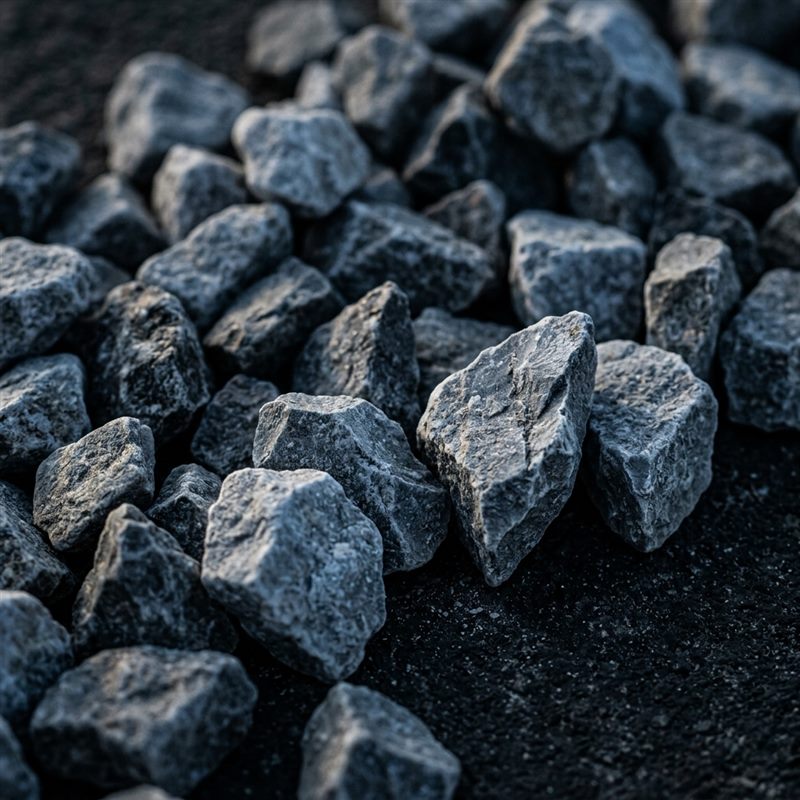
This is critically important. Not all gravel works for drainage. Using the wrong type can clog your drain within a few years and require complete excavation and replacement.
The Only Correct Choice: Clean Washed Crushed Stone
The industry standard for French drains is #57 clean washed crushed stone (also called #57 stone, #57 gravel, or angular drainage stone). Here is why it is the only correct choice:
- Angular shape creates large, consistent void spaces between stones (approximately 35–40% void ratio)
- Washed clean means no fines, dust, or small particles that would clog the voids
- Uniform size (3/4 to 1 inch) ensures consistent drainage performance
- Does not compact into an impermeable mass under normal conditions
Gravels You Should NEVER Use in a French Drain
| Gravel Type | Problem | Why It Fails |
|---|---|---|
| Pea gravel | Too round, too small | Compacts into tight mass, slow drainage, migrates into pipe slots |
| Stone dust / crusher fines | Too fine | Immediately clogs voids and pipe |
| Crusher run / quarry process | Contains fines | The dust fills all void spaces |
| River rock (large) | Too large | Inconsistent void space, pipe can shift |
| Decomposed granite | Too fine when wet | Breaks down and clogs filter fabric |
| Pea gravel + sand mix | Both issues | Double disaster — voids and fines |
Only use: Clean washed angular crushed stone, #57 gravel, #67 stone, or equivalent angular drainage aggregate. When in doubt, ask your supplier specifically for “clean washed drainage stone” with no fines.
How Deep Should a French Drain Be?
Proper depth depends on what you are draining and where the water needs to go:
For Surface Water and Yard Drainage: 12 to 18 Inches
If you are managing surface water runoff — pooling in your yard after rain — a shallower trench works well:
- 12 inch depth: Handles moderate surface water
- 18 inch depth: Better for heavy rainfall areas and clay soils
For Foundation and Basement Protection: 24 to 36 Inches
Protecting your foundation requires the drain to be deeper than your footings:
- 24 inch depth: Typical for raised foundation homes
- 36 inch depth: Needed for full basement protection — drain must sit below the basement floor level
- Always install at least 6 inches deeper than the foundation footing
For Retaining Wall Drainage: 12 to 24 Inches
Water behind retaining walls creates dangerous hydrostatic pressure:
- Typically placed at the base of the wall
- Depth matches the wall footing depth (12–24 inches typical)
- Must outlet at a lower elevation on the downhill side
Trench Width: How Wide Should You Dig?
Width affects both the volume of gravel and the drainage capacity:
| Trench Width | Best For | Gravel Per Linear Foot (18” deep) |
|---|---|---|
| 6 inches | Light surface drainage, small yard puddles | ~0.23 cu ft / 0.015 tons |
| 12 inches | Standard residential French drains | ~0.47 cu ft / 0.031 tons |
| 18 inches | Heavy drainage, clay soils, high water table | ~0.71 cu ft / 0.046 tons |
| 24 inches | Foundation drains, retaining walls | ~0.94 cu ft / 0.062 tons |
General Rule: Make the trench at least 3 times wider than the diameter of the perforated pipe you are installing.
Step-by-Step: How to Install a French Drain
Materials You Will Need
- Clean washed #57 crushed stone (calculated tonnage)
- Perforated 4-inch or 6-inch drainage pipe
- Landscape fabric / drain filter cloth (non-woven geotextile)
- Stakes to hold fabric in place
- Landscape staples or pins
Tools Required
- Trenching shovel or rented trenching machine
- Level and slope gauge
- Wheelbarrow
- Rake and tamper
- String line for slope marking
Installation Steps
Step 1: Plan the slope A French drain must slope continuously toward the outlet — minimum 1% grade (1 inch per 8 feet). No low points or flat sections. Mark the slope with stakes and string before digging.
Step 2: Dig the trench Excavate to your planned width and depth. Remove all loose soil. Check that the trench bottom has consistent slope toward the outlet with no flat sections or high spots.
Step 3: Line with landscape fabric Unroll non-woven landscape fabric (geotextile) into the trench, overlapping the sides by at least 12 inches. This prevents soil from migrating into the gravel. Do not use woven plastic sheeting — it clogs too easily.
Step 4: Add gravel base layer Pour 2–3 inches of clean washed crushed stone into the bottom of the fabric-lined trench and level it out. This creates a bed for the pipe.
Step 5: Lay the perforated pipe Place the 4-inch or 6-inch perforated pipe on the gravel bed with the perforations facing DOWN (not up — this is a common mistake). The slots face down so water rises up into the pipe from below.
Step 6: Cover with more gravel Fill the trench with clean crushed stone to within 3–4 inches of the surface, completely surrounding and covering the pipe.
Step 7: Fold and overlap the fabric Pull the sides of the landscape fabric up and over the top of the gravel, overlapping in the center by at least 12 inches. This creates a complete fabric sock around the gravel.
Step 8: Top off and finish Add a final 3–4 inch layer of gravel on top of the folded fabric, or cover with soil and sod to restore the lawn appearance.
Common French Drain Mistakes to Avoid
Using the Wrong Gravel
This is the most common and most expensive mistake. Pea gravel, sand, crusher run, or any gravel with fines will clog the drain within a few years. Always use clean washed #57 angular crushed stone.
Perforated Pipe Holes Facing Up
Holes facing up fill with gravel and debris immediately. Always install with perforations pointing down.
Insufficient Slope
A flat or inconsistently sloped trench creates standing water that undermines the entire drainage system. Check slope frequently during installation — minimum 1 inch drop per 8 feet of length.
No Filter Fabric
Without landscape fabric, soil migrates into the gravel over time, slowly clogging the voids. Every French drain needs non-woven geotextile fabric.
No Defined Outlet
Water must go somewhere. Your French drain needs a defined outlet — a daylight outlet on a lower slope, a catch basin, a dry well, or connection to a storm drain. Without an outlet, you are just moving the problem.
Trenching Too Shallow
A drain that is only 6 inches deep will only intercept surface water. For subsurface drainage problems, the trench must be deep enough to intercept the saturated zone — typically 18–36 inches.
Gravel Quantity by Project Size
Use this table for quick estimates for common French drain projects:
| Project | Trench Size | Length | Gravel Needed |
|---|---|---|---|
| Small yard puddle fix | 6” wide x 12” deep | 25 ft | 0.6 tons |
| Standard residential drain | 12” wide x 18” deep | 50 ft | 3.9 tons |
| Long property boundary drain | 12” wide x 18” deep | 100 ft | 7.8 tons |
| Foundation perimeter drain | 18” wide x 24” deep | 150 ft | 35 tons |
| Dry well (4 ft x 4 ft x 4 ft) | N/A | N/A | 5.4 tons |
| Basement waterproofing | 12” wide x 36” deep | 120 ft | 18.7 tons |
Frequently Asked Questions
What kind of gravel is best for a French drain?
Clean washed #57 crushed stone is the universally recommended material. It is angular (for maximum void space), clean (no fines to clog), and a consistent size (3/4 to 1 inch). Never use pea gravel, crusher run, or any stone with fines in a French drain.
How many tons of gravel for a 100-foot French drain?
For a standard residential French drain (12 inches wide x 18 inches deep x 100 feet long): 100 x 1 x 1.5 = 150 cubic feet / 27 = 5.56 cubic yards x 1.4 = 7.78 tons Order 8.5 tons to include a 10% buffer.
Can I use pea gravel in a French drain?
No — pea gravel is not recommended for French drains. Its smooth, round shape allows it to compact into a dense mass with small voids. It also tends to migrate into perforated pipe slots over time. Always use angular, clean washed crushed stone.
Do I need gravel if I use a sock pipe?
Sock-covered perforated pipe (pipe wrapped in geotextile fabric) still needs gravel surrounding it to function. The sock prevents the finest particles from entering the pipe, but gravel provides the void space that allows water to reach the pipe. You cannot run a perforated pipe through bare soil without gravel.
How do I stop my French drain from clogging?
Three things prevent French drain clogging:
- Use clean washed angular stone (no fines)
- Always wrap with non-woven geotextile landscape fabric
- Install a cleanout access point at each end to flush the drain periodically
How much does a French drain cost?
DIY materials for a 50-foot standard French drain typically cost:
- Gravel (4 tons): $120–$200
- Perforated pipe (50 ft): $50–$100
- Landscape fabric: $30–$60
- Total materials: $200–$360
Professional installation adds $20–$50 per linear foot for labor, bringing a 50-foot French drain to $1,200–$2,800 installed.
How long does a French drain last?
A properly installed French drain with clean washed stone and landscape fabric typically lasts 15 to 25 years. Drains installed without fabric or with the wrong gravel type may need replacement within 5–10 years as fines migrate in and clog the system.
Final Tips Before You Order
- Add 10% buffer — always order 10% more than your calculated amount
- Order clean, washed stone specifically — tell your supplier it is for a French drain; they know exactly what you need
- Minimum delivery is typically 3–5 tons — if you need less, pick up bagged material or split a delivery with a neighbor
- Check local regulations — some municipalities require permits for drainage work or restrict where water can be redirected
💡 Use our French Drain Gravel Calculator to calculate exact tonnage, cubic yards, and cost for your specific trench dimensions — including options for different pipe sizes and fill configurations.
Found this helpful? Share it!
Ready to calculate your gravel?
Use our free calculator to get instant volume, weight & cost estimates.
Try the Free Calculator →