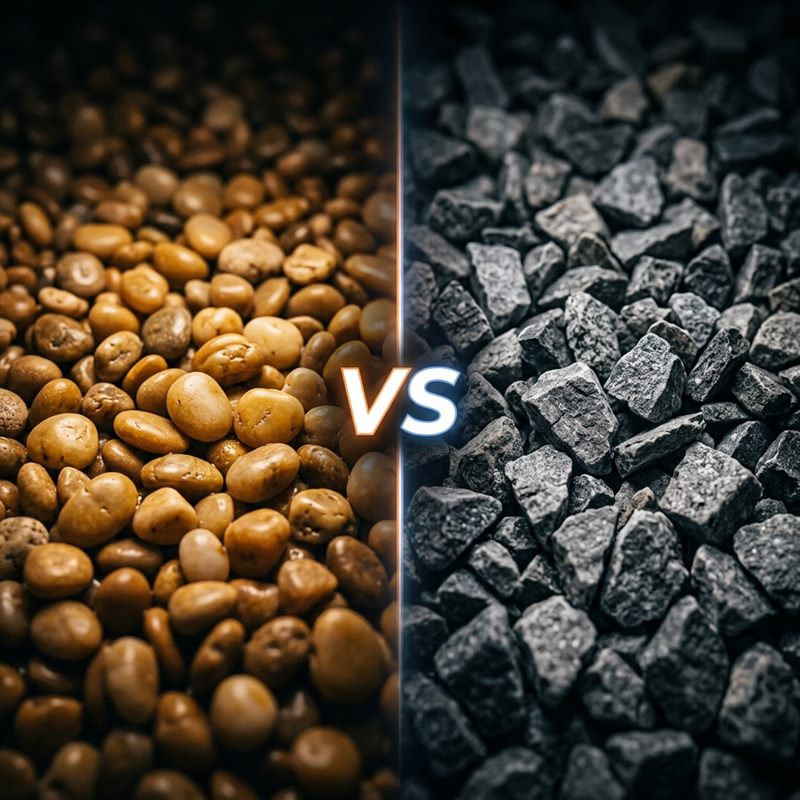
Interactive Gravel Explorer
Click any type to see details & photos
Choosing between pea gravel and crushed stone is one of the most common dilemmas for homeowners and contractors alike. Both are popular, widely available, and affordable — but they perform very differently depending on your project.
In this complete comparison guide, we’ll break down every important difference between pea gravel and crushed stone, covering drainage, cost, durability, aesthetics, and the exact situations where each one wins.
Quick Answer: Choose crushed stone for driveways, structural bases, and drainage. Choose pea gravel for decorative paths, patios, playgrounds, and garden aesthetics.
At a Glance: Pea Gravel vs Crushed Stone
| Feature | Pea Gravel | Crushed Stone |
|---|---|---|
| Shape | Smooth, rounded | Angular, jagged |
| Size | ⅛” – ⅜” | ¾” – 1” (most common) |
| Colors | Tan, brown, mixed earth tones | Gray, white, blue-gray |
| Cost | $25–$50/ton | $20–$40/ton |
| Drainage | Good | Excellent |
| Compaction | ❌ Poor — shifts and rolls | ✅ Excellent — locks together |
| Driveways | ⚠️ Not recommended | ✅ Best choice |
| Walkways | ✅ Comfortable underfoot | ⚠️ Rough on bare feet |
| Decorative | ✅ Beautiful, natural look | ⚠️ Industrial appearance |
| DIY-Friendly | ✅ Very easy | ✅ Easy |
| Edging Required | ✅ Yes — always | ⚠️ Recommended |
What Is Pea Gravel?
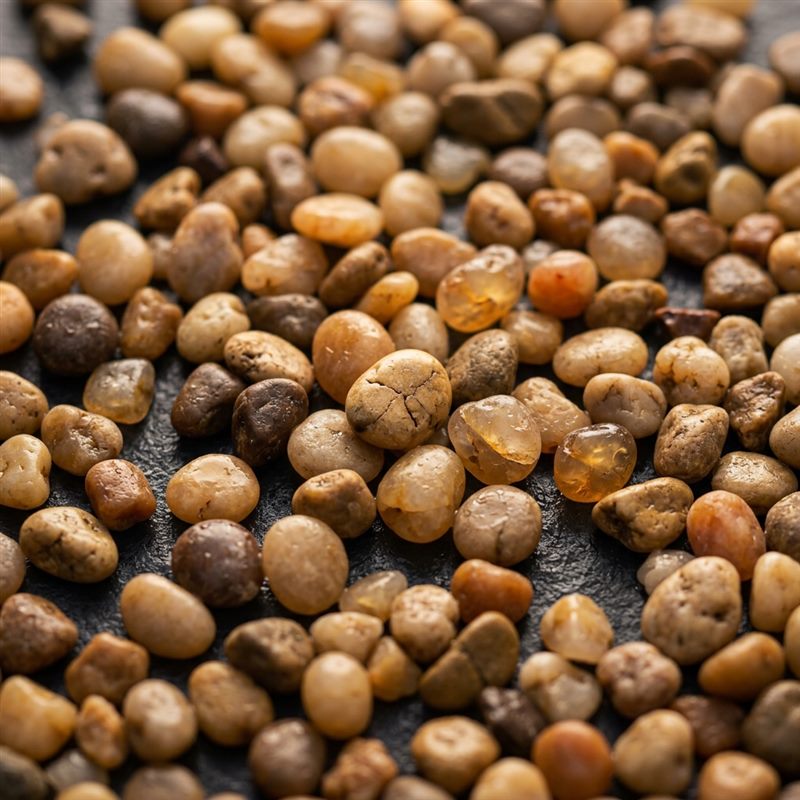
Pea gravel is a naturally occurring, water-worn gravel named for its resemblance to peas. It ranges from ⅛” to ⅜” in diameter and has been smoothed by rivers and glaciers over thousands of years. Its defining characteristics are:
- Smooth, rounded edges — comfortable to walk on barefoot
- Warm, natural colors — tan, buff, brown, reddish, and mixed tones
- No compaction ability — the round shape means stones roll freely
- Decorative appeal — looks beautiful in landscaping settings
Pea gravel is quarried from riverbeds and glacial deposits, then washed and sorted by size. It’s typically sold in bags (for small projects) or by the ton or cubic yard (for larger applications).
Typical Cost of Pea Gravel
- Bagged (0.5 cu ft): $4–$8 per bag
- Bulk: $25–$50 per ton
- Delivered: $35–$65 per ton (includes delivery fee)
What Is Crushed Stone?
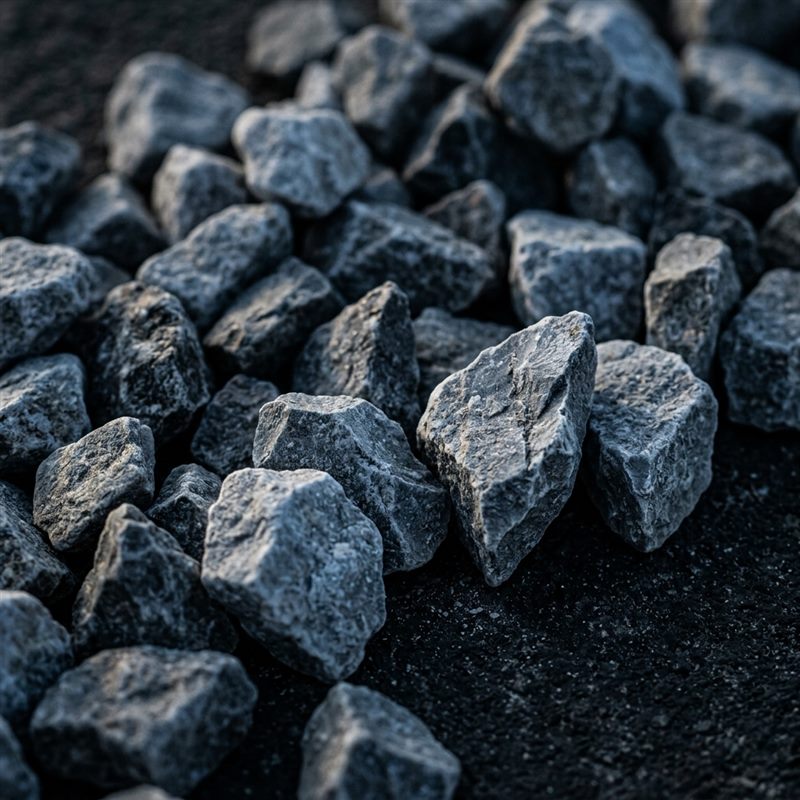
Crushed stone is mechanically produced by crushing larger rocks — typically limestone, granite, trap rock, or dolomite — in a quarry. Unlike pea gravel, it has never been smoothed by water, giving it distinctly angular, jagged edges.
The most common type is #57 crushed stone (¾” to 1”), though crushed stone comes in many grades. Key characteristics:
- Angular edges — interlock under pressure for stability and compaction
- Gray to blue-gray colors — uniform, utilitarian appearance
- Excellent compaction — becomes firmer over time with traffic
- Versatile — used in construction, drainage, and landscaping
Typical Cost of Crushed Stone
- Bulk: $20–$40 per ton
- Delivered: $30–$55 per ton
- Crusher run (base material): $15–$30 per ton
Head-to-Head Comparison
1. Driveways
This is where the two materials differ most dramatically.
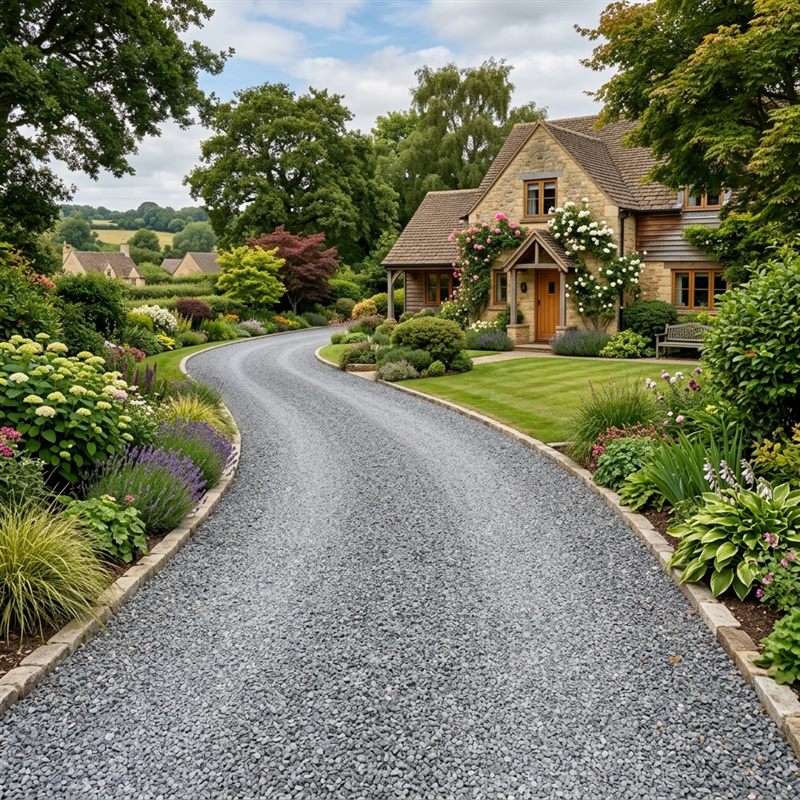
Crushed Stone for Driveways: ✅ Winner
Crushed stone is the undisputed champion for driveways. Here’s why:
- The angular edges interlock when compressed under vehicle weight, creating a stable surface
- It compacts over time — the more traffic, the firmer it gets
- It resists rutting, displacement, and sinking
- Works with a proper layered system: crusher run base → #57 middle → top dressing
Pea Gravel for Driveways: ❌ Not Recommended
Pea gravel’s smooth, round shape is its fatal flaw for driveways:
- Stones roll and scatter under tire pressure
- Creates dangerous loose surface — like driving on marbles
- Constantly migrates to edges and lawn, requiring frequent raking
- Vehicles can get stuck in deep accumulations
Verdict: Use crushed stone (#57 or limestone) for any driveway. For a pea gravel driveway border or edging, it can work decoratively alongside a crushed stone main surface.
2. Patios & Outdoor Living Spaces
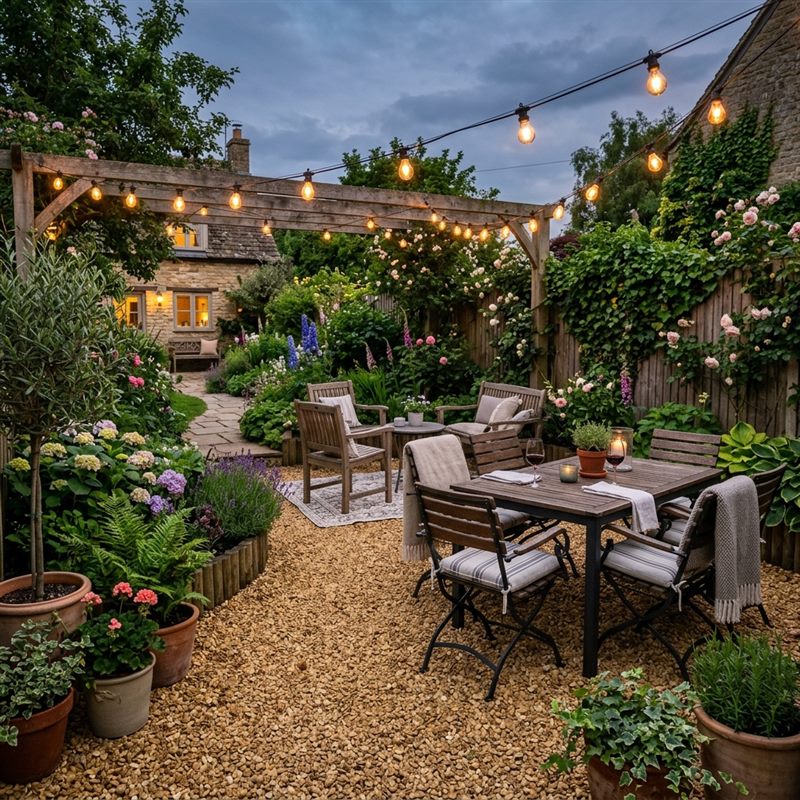
Pea Gravel for Patios: ✅ Winner
Pea gravel creates a charming, natural-feeling patio surface that’s hard to match:
- Comfortable underfoot — smooth stones are pleasant to walk on
- Excellent drainage — no puddles after rain
- Beautiful aesthetics — warm tones complement furniture and plants
- Easy and cheap to install as a DIY project
- Works well with string lights for an intimate atmosphere
- Great for furniture legs (with rubber caps to prevent sinking)
Crushed Stone for Patios: ⚠️ Functional but Rough
Crushed stone can be used for patios but has trade-offs:
- The angular edges are uncomfortable on bare feet
- Less visually appealing for outdoor entertaining
- Better suited as a sub-base under pavers, not as a finished surface
Verdict: Pea gravel wins for patios and outdoor living. Just make sure to install proper edging (benderboard, brick, or metal) to prevent migration, and consider laying landscape fabric underneath to suppress weeds.
3. Drainage Projects
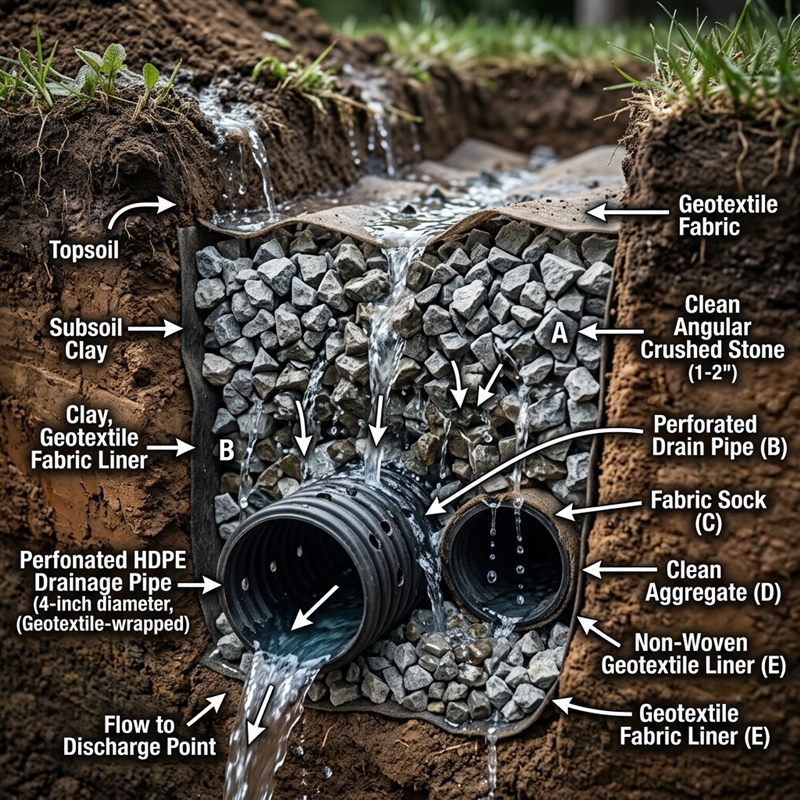
Crushed Stone for Drainage: ✅ Clear Winner
For French drains, dry wells, trench drains, and drainage backfill, crushed stone is the professional’s choice:
- Angular shape creates large void spaces between stones (30–40% void ratio)
- Water flows freely and quickly through the material
- Doesn’t compact into a clog-prone mass when used with filter fabric
- The industry-standard for French drains is #57 crushed stone
- Pipe bedding and surround always uses clean crushed stone
Pea Gravel for Drainage: ⚠️ Works, But Less Effective
Pea gravel does allow water to pass through, but:
- Round stones pack more tightly, leaving smaller voids
- Lower void ratio means slower drainage
- Can shift and settle more than angular stone
- Still usable for light drainage applications, just not optimal
Verdict: For any serious drainage project — French drains, downspout drainage, retaining wall backfill — always use crushed stone. The superior void space is critical for long-term performance.
4. Walkways & Paths
Pea Gravel for Walkways: ✅ Winner
Pea gravel creates beautiful, comfortable garden paths:
- Soft and pleasant on bare feet and sandals
- Natural look blends seamlessly into garden settings
- Easy to rake and maintain
- Works beautifully between stepping stones
Key tips for pea gravel paths:
- Use a 2–3 inch depth for proper coverage
- Install rigid edging on both sides — it will migrate without it
- Lay landscape fabric underneath to prevent weeds from growing up through
Crushed Stone for Walkways: ⚠️ Usable but Less Comfortable
Crushed stone works for paths but has downsides:
- Angular edges can be uncomfortable, especially for bare feet or sandals
- Decomposed granite is a better crushed-stone alternative for paths
- Good for utilitarian areas like utility paths and side yards
Verdict: For decorative garden paths and areas where foot comfort matters, pea gravel wins. For utility walkways, either works.
5. Playgrounds & Play Areas
Pea Gravel for Playgrounds: ✅ Winner
Pea gravel is a certified playground safety surface and one of the most popular choices:
- ASTM F1292 compliant at appropriate depths (typically 6”+ for fall protection)
- Smooth stones won’t scratch or cut skin during falls
- Natural look appeals to parents and kids alike
- Provides good cushioning when properly maintained
- Drains well, drying quickly after rain
Crushed Stone for Playgrounds: ❌ Not Suitable
Never use crushed stone under playground equipment:
- Sharp, angular edges can cause lacerations during falls
- Fails safety standards for playground surfaces
Verdict: Pea gravel is the only acceptable choice between these two for playgrounds.
6. Cost Comparison
| Project | Pea Gravel (per 100 sq ft, 3”) | Crushed Stone (per 100 sq ft, 3”) |
|---|---|---|
| Materials | $30–$60 | $25–$50 |
| Delivery | $50–$150 | $50–$150 |
| Landscape Fabric | $15–$30 | $15–$30 |
| Edging | $20–$60 | $15–$40 |
| Total Estimate | $115–$300 | $105–$270 |
Both materials are very affordable. Crushed stone is slightly cheaper per ton, but the difference for most residential projects is minimal — typically under $30.
Pros & Cons Summary
Pea Gravel Pros & Cons
✅ Pros
- Beautiful natural appearance
- Smooth — comfortable underfoot and safe for playgrounds
- Good drainage
- Easy DIY installation
- Wide color variety
- Works great for patios, paths, and decorative borders
❌ Cons
- Shifts and migrates constantly — needs edging
- Cannot be compacted — not suitable for driveways
- Requires periodic raking and replenishment
- Can track into home and lawn
- More expensive than crushed stone per ton
Crushed Stone Pros & Cons
✅ Pros
- Compacts and interlocks — ideal for driveways and high-traffic areas
- Better drainage void ratio
- Very affordable (especially crusher run)
- Firms up over time
- Industry standard for drainage, foundations, and road base
❌ Cons
- Sharp edges — uncomfortable on bare feet
- Less attractive than pea gravel
- Tracks dust and fines on shoes
- Angular edges can cause cuts
Which One Should You Choose?
Use this quick decision guide:
Choose Pea Gravel If:
- You’re creating a patio or outdoor entertaining area
- You need a comfortable walkway or garden path
- You want decorative ground cover under trees or in flower beds
- You’re building a playground or play area
- You want aquarium substrate or decorative filling
- Aesthetics and visual appeal are a priority
Choose Crushed Stone If:
- You’re building or resurfacing a driveway
- You need a drainage solution (French drain, trench, backfill)
- You’re creating a structural base under pavers, patios, or sheds
- You need a road base or heavy-traffic surface
- You’re doing concrete or asphalt mix aggregate
- Durability and compaction matter more than looks
Use Both Together If:
You can also combine them for the best of both worlds:
- Layer 1: Crusher run base (4–6 inches)
- Layer 2: #57 crushed stone mid-layer (3–4 inches)
- Layer 3: Pea gravel decorative top coat (1–2 inches) on patios and paths
Installation Tips
Installing Pea Gravel
- Mark the area with stakes and string or marking paint
- Excavate 4–5 inches of soil
- Compact the subgrade with a plate compactor or hand tamper
- Install edging — steel, aluminum, or plastic benderboard
- Lay weed barrier fabric — overlap seams by 6 inches
- Pour and spread pea gravel to 2–3 inch depth
- Rake smooth and enjoy!
Installing Crushed Stone
- Mark and excavate 4–6 inches (more for driveways — 8–12 inches with base layers)
- Grade the subgrade with a slight slope for drainage (1–2%)
- Compact the subgrade thoroughly
- Add and compact crusher run base (if for driveway or heavy use)
- Add #57 crushed stone in 2–3 inch lifts, compacting each layer
- Rake level and allow to settle
Maintenance Comparison
| Maintenance Task | Pea Gravel | Crushed Stone |
|---|---|---|
| Frequency | Moderate | Low |
| Raking | Every 1–2 months | Rarely needed |
| Top-dressing | Every 1–3 years | Every 3–5 years |
| Weed control | Landscape fabric helps | Less weed pressure |
| Tracking | Some tracking into home | Minimal |
| After storms | May need raking | Generally self-correcting |
| Annual cost | $15–$40/yr (avg) | $10–$25/yr (avg) |
Environmental Considerations
Both materials are natural, non-toxic, and permeable — a major advantage over concrete and asphalt. They allow rainwater to soak into the ground naturally, reducing stormwater runoff.
Pea Gravel: Sourced from riverbeds and glacial deposits. Over-excavation of riverbeds can cause environmental disruption, so source from reputable suppliers using sustainable practices.
Crushed Stone: Quarried from bedrock. Quarrying has environmental impacts but is generally a well-regulated industry. Recycled crushed concrete can be used as an eco-friendly alternative.
Frequently Asked Questions
Can you mix pea gravel and crushed stone?
Yes! Layering is a popular technique — crushed stone as a compact base with pea gravel as a decorative top layer. However, mixing them together creates a poor-performing material: the pea gravel fills the voids in crushed stone, reducing drainage and eliminating the interlocking benefit.
Is pea gravel cheaper than crushed stone?
Crushed stone is generally slightly cheaper per ton ($20–$40 vs $25–$50), but the price difference is small for most projects. Both are among the most affordable outdoor materials.
How deep should pea gravel be for a patio?
2–3 inches for a standard patio. For playgrounds, use 6+ inches for proper fall protection.
How deep should crushed stone be for a driveway?
A properly constructed gravel driveway should have 4–6 inches of compacted #57 stone, ideally over a 4–6 inch crusher run base. Total depth: 8–12 inches.
Will pea gravel shift in rain?
Heavy rain can move pea gravel, especially on slopes. Always install on flat or gently sloped areas and use edging. On slopes above 5%, crushed stone or decomposed granite is a better choice.
Which is better for dogs?
Pea gravel is the better choice for dog runs and pet areas. The smooth stones are gentle on paws, drain well (for bathroom areas), and are easy to clean. Crushed stone’s sharp edges can be uncomfortable for dogs.
Does crushed stone get muddy?
Crushed stone itself doesn’t get muddy, but if installed over clay soil without proper drainage, the clay below can work up through the stone over time. Using landscape fabric and a proper base prevents this.
Final Verdict
Both pea gravel and crushed stone are excellent materials — in their right applications.
Pea gravel wins on beauty, comfort, and versatility for decorative applications. Crushed stone wins on performance, stability, and drainage for functional applications.
The good news: at $20–$50 per ton, you don’t have to pick just one. Many of the best landscaping and hardscaping projects use both together — crushed stone for structure and drainage, pea gravel for the finishing touch that makes it beautiful.
💡 Not sure how much you need? Use our free Gravel Calculator to calculate exact quantities and cost for your project in seconds — whether you’re using pea gravel, crushed stone, or both!
Found this helpful? Share it!
Ready to calculate your gravel?
Use our free calculator to get instant volume, weight & cost estimates.
Try the Free Calculator →